Short answer: is chromium picolinate for you?
Chromium contributes to the maintenance of normal blood glucose levels and to normal macronutrient metabolism, but it is not a magic bullet for sugar cravings and not a weight-loss aid. A healthy person eating a varied diet rarely needs a chromium supplement, and the evidence for effects on cravings and body composition is limited and mixed.
- If you want to try chromium: choose a familiar form (such as picolinate) and stay within the serving on the label; a typical supplement strength is 200 micrograms per serving.
- Caution: if you take diabetes or thyroid medication, or you are pregnant or breastfeeding, talk to your doctor first.
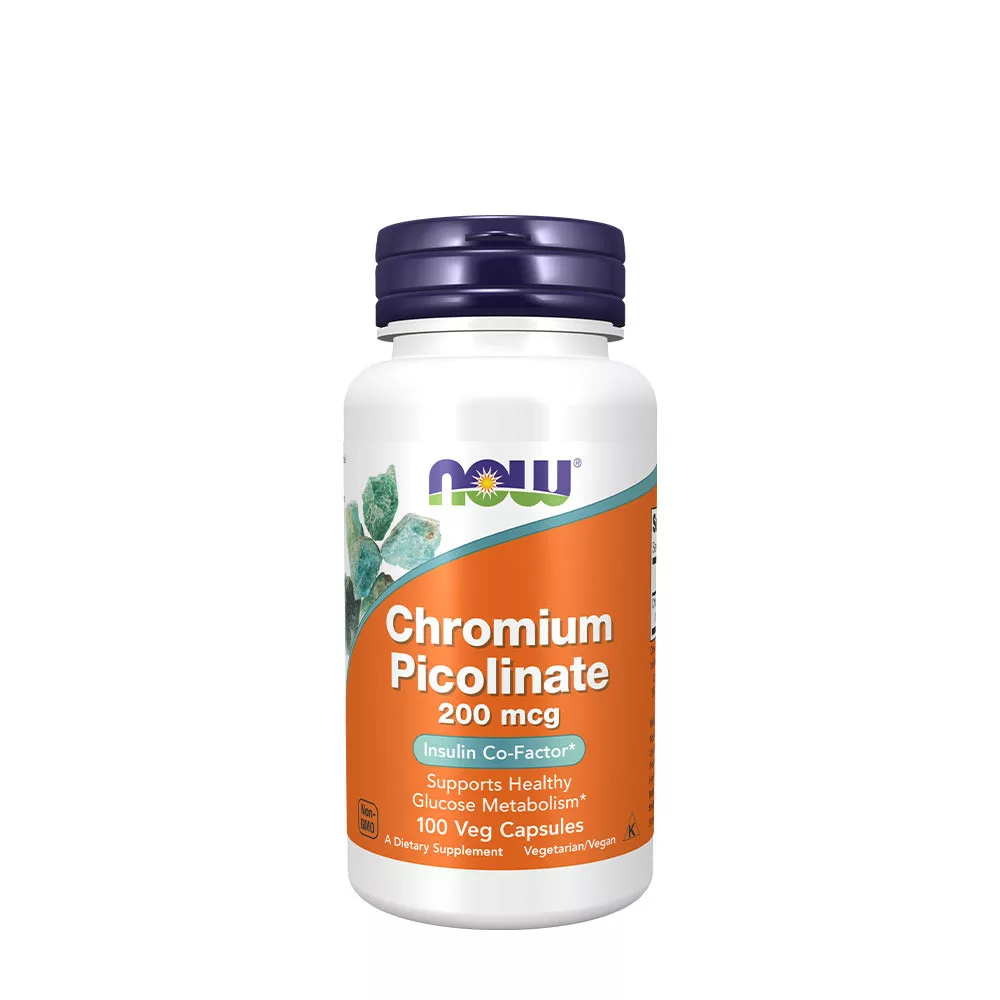
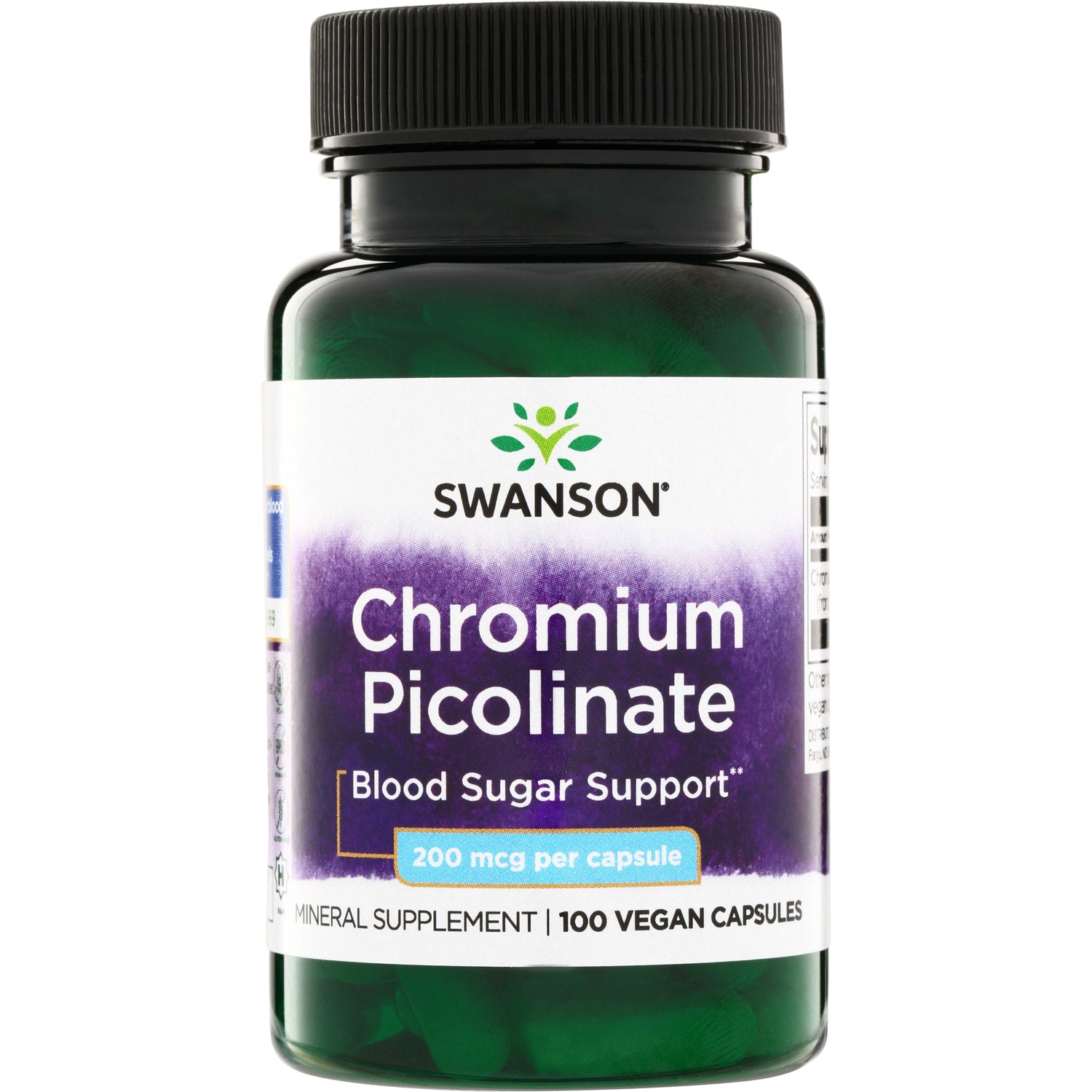
- Where to start: NOW Chromium Picolinate 200mcg 100 capsules or Swanson Chromium Picolinate 100 capsules; for a feeling of fullness, also look at Intenson Psyllium Husk 150 g.
This is general information, not medical advice. Consult a doctor or pharmacist before use, especially if you are pregnant, breastfeeding, taking medication or have a chronic condition.
In stock now: Chromium
Chromium picolinate is often advertised as the answer to sugar cravings and fluctuating blood sugar, but the real picture is more modest. In this guide we look at what chromium actually does in the body, what studies show, how the forms differ and who the supplement makes sense for. At the end there is a selection of products to choose from based on your situation.
What is chromium picolinate and what does chromium do in the body?
Chromium is a trace mineral that the body needs in very small amounts. Chromium picolinate is trivalent chromium (Cr III) bound to picolinic acid. This bond is intended to support absorption, because chromium is generally absorbed very poorly from both food and supplements, with only a small percentage of the amount taken getting through.
The European Food Safety Authority (EFSA) has confirmed two claims about chromium: chromium contributes to normal macronutrient metabolism and to the maintenance of normal blood glucose levels. These claims describe chromium’s role in normal metabolism. They do not mean that extra chromium will push blood sugar below normal or make the body more insulin-sensitive when there is no deficiency.
The nutrient reference value (NRV) for chromium in Europe is 40 micrograms per day. Chromium is found in food such as wholegrain products, broccoli, meat and eggs, but the amounts are small and vary. Chromium deficiency is rare in healthy people and hard to confirm with a lab test. That is why there is little point in taking a supplement “just in case” if your diet is varied.
What do studies actually show about blood sugar, cravings and weight?
It is important to separate three things here, because advertising often lumps them together.
- Blood sugar: according to several review studies, the effect on blood sugar markers is small and varies widely between studies. If an effect appears at all, it is more likely in people who already have difficulty regulating blood sugar. No clear benefit has been shown in healthy people. If you have diabetes or prediabetes, this is a question for your doctor, not a reason to buy a supplement.
- Sugar cravings: a few small studies found weaker carbohydrate cravings in the group receiving chromium. The samples are small and the results are inconsistent, so the evidence is limited. Some manufacturers describe a reduced urge to snack on sweets, but this is not an EFSA-confirmed claim.
- Weight and muscle mass: EFSA has assessed claims about body weight and body composition and has not approved them. Chromium does not on its own cause weight loss or muscle gain.
Honestly: if your sweet cravings come from irregular eating, too little protein, poor sleep or stress, improving those usually gives more than a chromium capsule. Chromium is a supplement you can try, not a primary measure.
Forms of chromium: how to choose
You will see several forms of chromium in shops. The differences are real, but not so large that you need to agonise over them because of the price.
| Form | What is known | Suits you if |
|---|---|---|
| Chromium picolinate | A common supplement form with plenty of human studies behind it | you want a standard, well-documented option |
| Chromium chloride | Generally poorly absorbed; limited comparison data against picolinate | you come across it in a multi-ingredient product |
| Chromium with nicotinic acid or histidine | Little studied in comparison with picolinate | picolinate does not suit you or the manufacturer offers just this form |
| Chromium in a multivitamin | Usually a small amount, often 25–50 micrograms | you eat a varied diet and do not need a separate supplement |
In practice it makes more sense to compare not the form but the dose and pack size. Check the label for how much chromium is in one serving, how many servings are in the pack and whether the supplement contains fillers that do not suit you. Capsule or tablet is essentially a matter of taste and habit.
Who is chromium for, and who should avoid it?
Who may find it worth trying
- A person whose diet is one-sided and carbohydrate-heavy and who wants to broaden their nutrient coverage.
- A gym-goer who wants to support normal carbohydrate metabolism but does not expect a miracle in muscle mass or fat loss.
- A person who has talked to their doctor and whose healthcare professional has approved trying chromium.
Who should avoid it or ask a doctor first
- People using diabetes medication or insulin: chromium may affect blood sugar levels, and the medication dose may need adjusting. Do not start on your own.
- People taking thyroid hormone: minerals can reduce the absorption of the medicine, so ask your doctor or pharmacist whether the supplement is suitable and how to time it.
- Pregnant and breastfeeding women: there is not enough data on the effects of the supplement, so stick to the amount you get from food.
- People with kidney or liver disease: isolated adverse effects have been described at high doses, so always ask your doctor first.
- Children and teenagers: not recommended without a doctor’s advice.
How to use chromium
Follow the serving on the label and do not exceed it. A typical strength in supplements is 200 micrograms, which is several times the nutrient reference value, so more does not mean better. EFSA has not set an upper intake level for chromium because there are too little data, which is another reason to stay with the label dose. Chromium can be taken with a meal, which is usually the most comfortable option for digestion.
- Give the trial time: try it for 8–12 weeks and honestly assess whether your sugar cravings or the way you feel after meals have changed. If not, there is no point in continuing.
- Add up the total: chromium may also be in a multivitamin and in sports blends, so add it all together.
- Get the basics in order: regular mealtimes, and protein and fibre at every meal, are often a stronger lever for sugar cravings than a supplement.
- Possible side effects: headache, nausea or digestive upset have rarely been described. If symptoms appear, stop using it and see a doctor.
Chromium, glucomannan or psyllium: which and when?
If your goal is more about a feeling of fullness and steadier well-being after meals, chromium is not the only option. Fibres work by a completely different mechanism: they bind water in the digestive tract and increase the volume of the contents.
| Chromium picolinate | Glucomannan | Psyllium husk | |
|---|---|---|---|
| What it is | A trace mineral | A soluble fibre from konjac root | Husks of Plantago ovata seeds, a fibre-rich powder |
| What to expect | Supports normal blood glucose levels and metabolism | According to the manufacturer, supports a feeling of fullness | Adds fibre to your diet |
| Good to know | Interactions with medication | Swallow capsules with plenty of water | Start with a small amount and drink plenty of water |
In the EU, the permitted claims for glucomannan apply only at a specific amount (the body-weight claim requires 3 g per day with at least one to two glasses of water, and works only as part of an energy-restricted diet). Reaching that amount with capsules is usually difficult, so check the actual serving size on the pack. Glucomannan capsules must always be swallowed with plenty of water, because a dry, swelling fibre can get stuck in the oesophagus. Fibre can slow the absorption of medication, so keep a gap of about 1–2 hours from any medicines.
Psyllium husk is a cheaper and more flexible way to add fibre: you stir it into a drink, porridge or soup. Start with a small amount so your gut can adjust, and be sure to drink enough water. If you have digestive problems, difficulty swallowing or suspect a bowel obstruction, talk to a doctor first.
Our recommendations: chromium and fibre
The choice depends on what you want to achieve and how much you want to buy at once.
- You want a standard chromium picolinate with a clear dose: NOW Chromium Picolinate 200mcg 100 capsules.
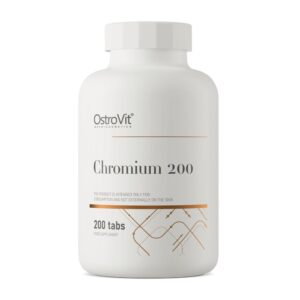
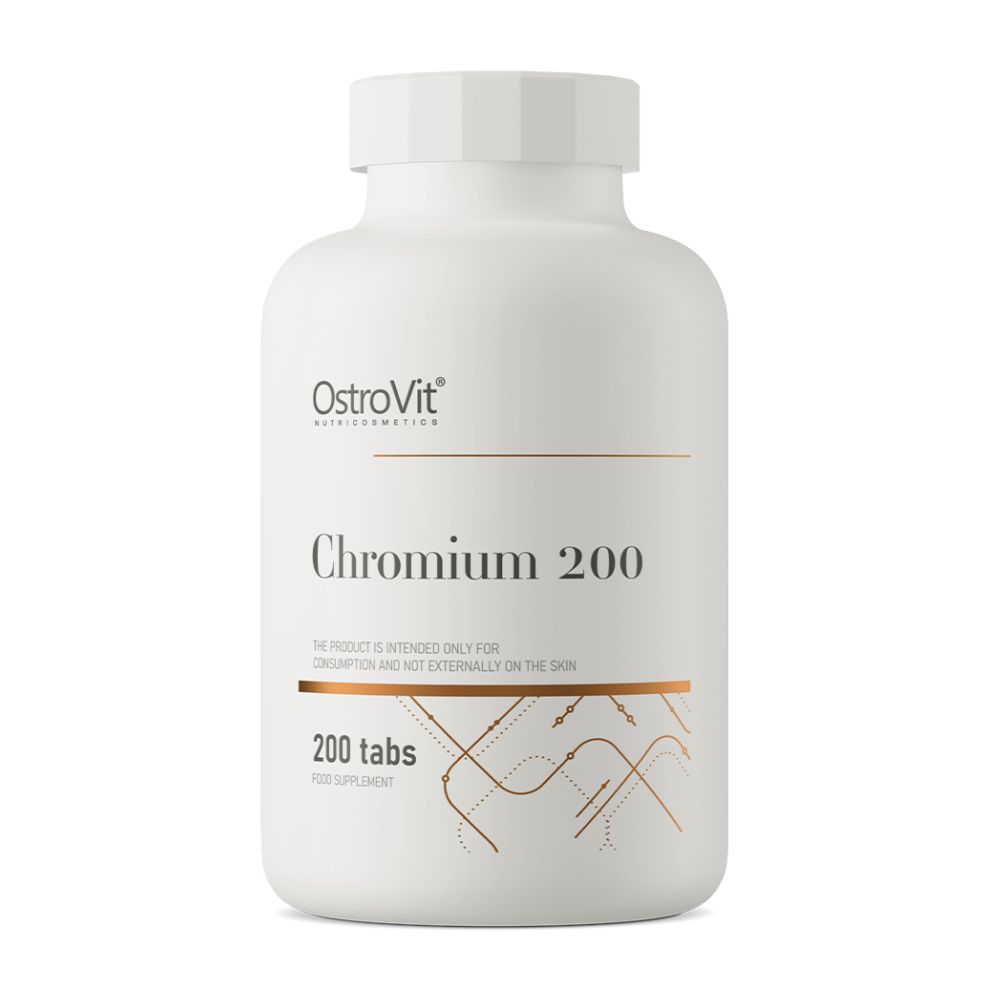
- You want a bigger pack for a longer trial (check the form of chromium on the label): OstroVit Chromium 200 μg 200 tablets.
- You want another chromium picolinate option: Swanson Chromium Picolinate 100 capsules.
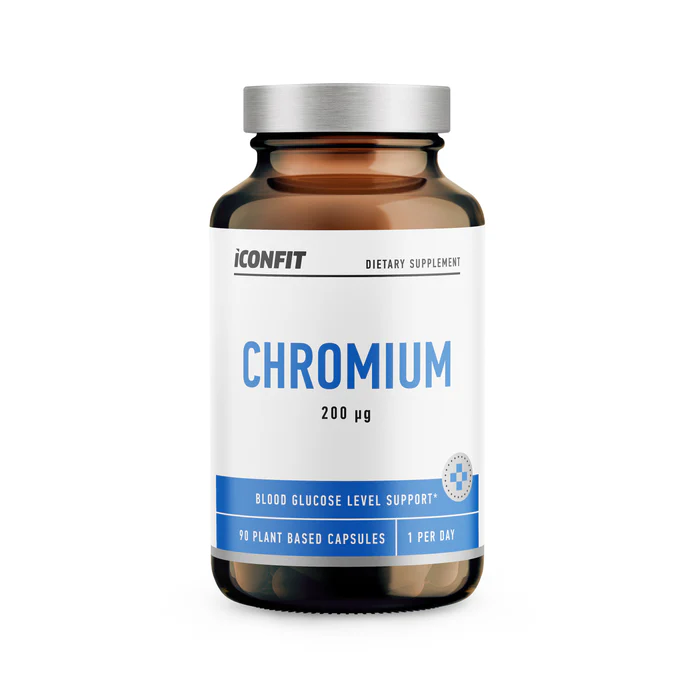
- You want one more capsule option (check the dose and form on the label): ICONFIT Chromium – 90 capsules.
- More about a feeling of fullness: Swanson Glucomannan 90 capsules (temporarily out of stock) or Intenson Psyllium Husk 150 g.


Frequently asked questions
Does chromium picolinate reduce sugar cravings?
In some small studies the group receiving chromium had weaker carbohydrate cravings, but the evidence is limited and the results are not consistent. No firm promise can be made. If snacking on sweets is a big issue for you, first look at your mealtimes, the amount of protein and fibre, and your sleep.
How much chromium should I take per day?
The nutrient reference value is 40 micrograms per day, and most supplements contain 200 micrograms per serving. Always follow the serving stated on the label, and do not combine several chromium-containing products without adding up the amounts.
When is the best time to take chromium?
With a meal, at whatever time of day suits you. The exact time of day has not been shown to matter; regularity matters more. People taking medication should ask their doctor or pharmacist about timing.
Does chromium help with weight loss?
No. EFSA has not confirmed any claims about weight or body composition for chromium. What counts when changing weight is energy balance, protein, activity and sleep. Chromium can be a small extra support alongside normal nutrition, not a solution.
Can chromium picolinate be taken together with diabetes medication?
Only with your doctor’s knowledge. Chromium can affect blood sugar levels, and together with medication there may be a risk of low blood sugar. Do not start or stop anything on your own.
Can chromium be taken long term?
At usual doses, short-term use is generally well tolerated, but data on long-term use are scarce. It is sensible to run a trial period (8–12 weeks), assess the result and take a break. If you use several products, check the total.
Which should I choose: capsules or tablets?
If the dose and form of chromium are the same, the difference is mainly convenience: capsules are easier for some people to swallow, while tablets often come in a larger pack. Look at the dose and the number of servings in the pack.
In summary: chromium picolinate is a simple, low-risk way to try something if you have no contraindications, but do not expect a miracle. If your goal is fullness and how you feel after meals, it is worth thinking about fibre just as seriously. If in doubt, ask your doctor or pharmacist.