Short answer: what does L-carnitine really do, and which form should you choose?
L-carnitine takes part in transporting fatty acids into cells for energy production, but as a supplement its effect on body weight and performance is modest. A healthy person eating an ordinary diet usually does not need it; the people most likely to try it are vegetarians and those who exercise regularly and want a supplement on top of an already solid diet. The choice should depend on your goal and convenience, not on an advertising slogan.
- Training and recovery: L-carnitine tartrate is the form most studied in sport; studies have typically used roughly 1-3 g a day for several weeks, but the results are modest.
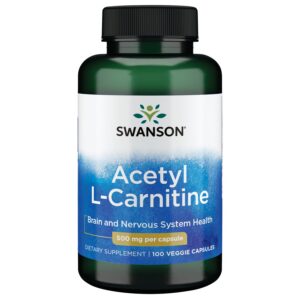
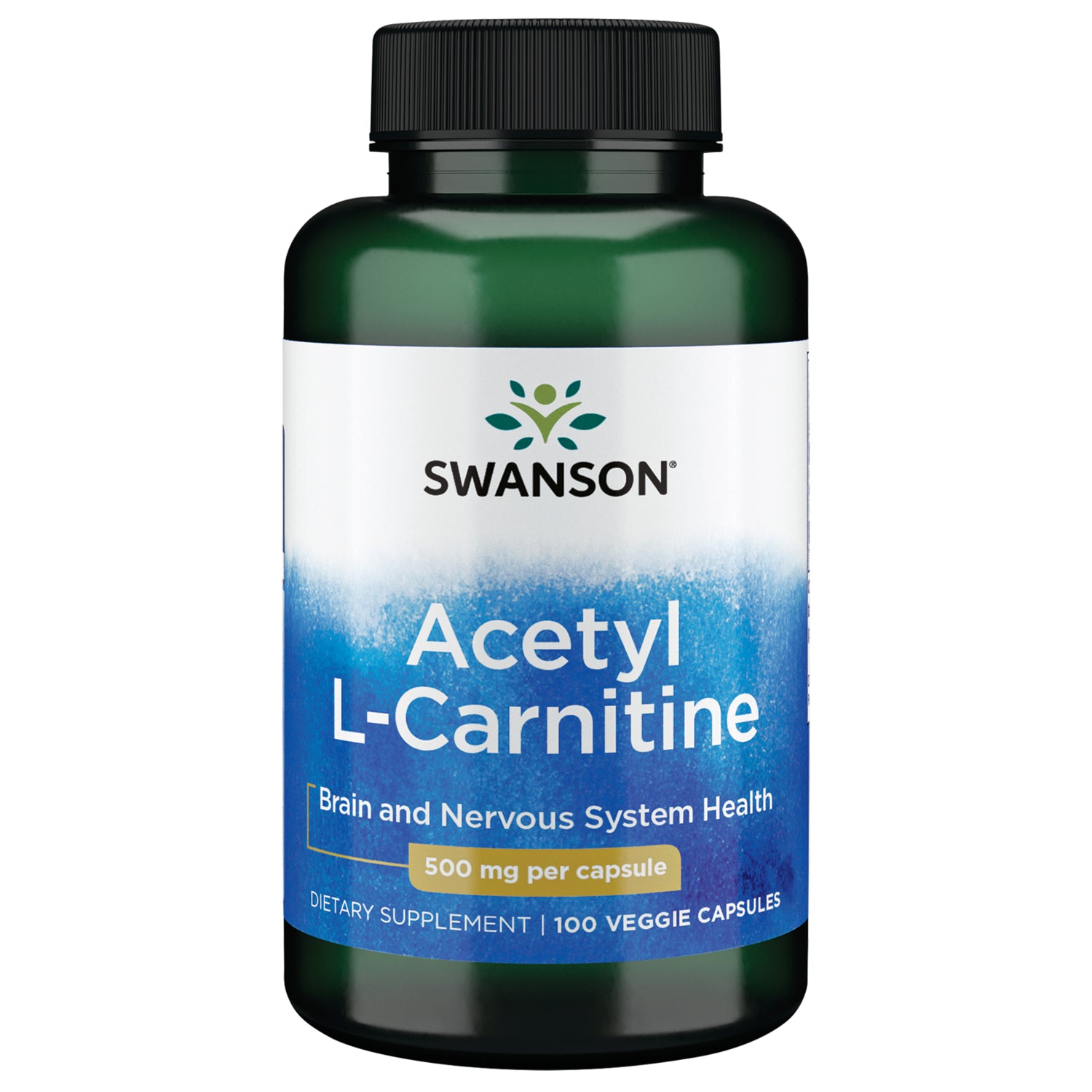
- Acetyl-L-carnitine (ALC): a form studied more in connection with brain function than with muscles; in healthy people the evidence is limited.
- Our picks to start with: L-Carnitine 1250MG 60 capsules (temporarily out of stock) (tartrate) or OstroVit ALC 200g supreme pure (acetyl form as a powder).
This is general information, not medical advice. If you are pregnant or breastfeeding, take medicines (for example ones that affect blood clotting or thyroid medicines) or have kidney disease, thyroid disease or epilepsy, talk to a doctor or pharmacist before use.
In stock now: Weight management
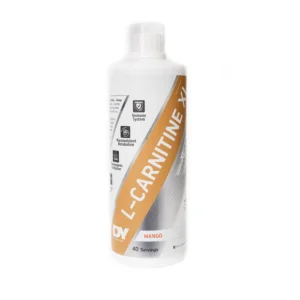
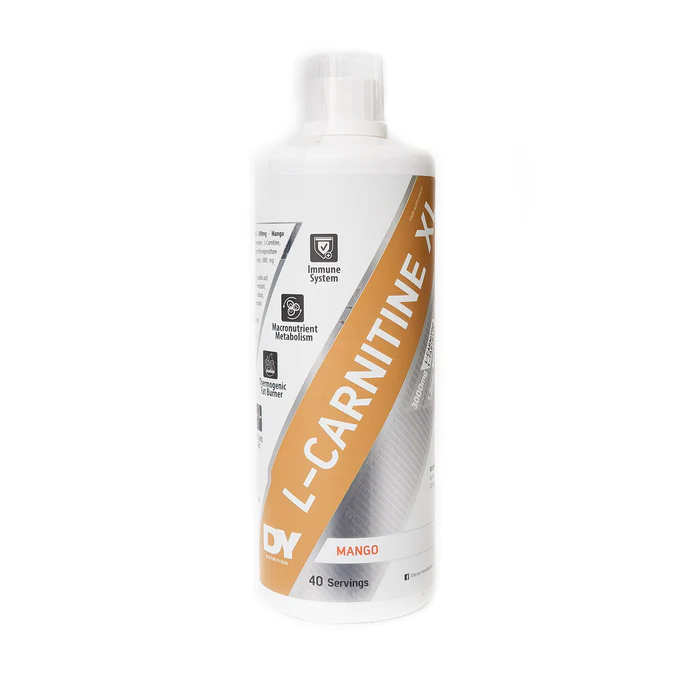
Liquid L-Carnitine XL – 1000ml – DY Nutrition
Weight management 35,00 € Select options This product has multiple variants. The options may be chosen on the product page
L-carnitine is a substance that the body makes itself and that we also get from food, mainly meat, fish and dairy products. In the shop you will find it as capsules, liquid and powder, and in combinations with fatty acids and green tea extract. Here we explain what L-carnitine does in the body, how tartrate, acetyl-L-carnitine, liquid and powder forms differ, and who has a reason to try it at all.
What is L-carnitine and what does it do in the body?
L-carnitine is synthesised in the liver and kidneys from the amino acids lysine and methionine. Its main job is to carry long-chain fatty acids into the cell’s power stations, the mitochondria, where they can be used to produce energy. The great majority (over 90 percent) of the body’s carnitine store sits in the muscles. A healthy adult normally makes and eats enough, so a deficiency is rare.
This also explains a common misconception: if carnitine helps move fatty acids, then extra carnitine should “burn” fat faster. In practice the body’s carnitine store is usually already sufficient, and the limiting factor is more often how much energy you spend overall. The list of authorised EU nutrition and health claims contains no weight-loss or performance claim for L-carnitine. So, honestly put, this is a supplement whose effect is rather small and differs from person to person.
What do studies show?
- Body weight: some pooled analyses have found an average difference of a couple of kilograms over several months. That is small and the results are inconsistent, so it does not replace diet or exercise.
- Training and recovery: some studies with tartrate suggest it may reduce post-exercise muscle soreness and markers of metabolic stress. An effect on muscle growth and strength has not been firmly established.
- Brain and ageing: acetyl-L-carnitine has been studied mainly in older people and in people with cognitive changes. The results are mixed and in healthy people the evidence is limited.
- Vegetarians: because carnitine comes mainly from animal foods, vegans and vegetarians get less from their diet. The body also makes its own, so the need for a supplement is unclear and individual.
Which form to choose: tartrate, acetyl, liquid or powder?
The difference is less about “strength” and more about what the form makes convenient for your goal. See the comparison below.
| Form | What it is | Who it suits | Note |
|---|---|---|---|
| L-carnitine tartrate (capsules) | Carnitine bound to tartaric acid | Someone who trains and prefers the form most studied in sport | Convenient and precise dosing |
| Acetyl-L-carnitine (ALC) | Carnitine with an acetyl group | Those interested in the form linked to brain function | Effects aimed at muscle are less studied than with tartrate |
| Liquid L-carnitine | A solution in a bottle | Those who do not want to swallow capsules | Measure the portion exactly; taste and shelf life differ |
| Powder | Pure carnitine (here ALC) measured in grams | Those who want to adjust the dose themselves | Needs a scale or measuring spoon |
| Combination (CLA, green tea, carnitine) | A capsule with several ingredients | Those who prefer a single capsule and tolerate caffeine | Check the label for how much carnitine a portion provides |
A practical rule: if the goal is training and recovery, start with tartrate. If you are more interested in the form associated with brain function, look at the acetyl form, but bear in mind the limited evidence. Liquid and powder are mainly a matter of convenience. Do not choose a product by which one promises a “faster” or “stronger” effect: the evidence does not support such a promise.
Who is L-carnitine for, and who should not use it?
Who may benefit
- Vegetarians and vegans whose diet contains little carnitine.
- People who exercise regularly, want to support recovery and are willing to experiment for several weeks.
- People who want a supplement on top of an already complete diet and training routine, not a substitute for them.
Who does not need it or should be careful
- Those who regularly eat meat, fish and dairy products: their carnitine store is usually sufficient.
- Pregnant and breastfeeding women: there is not enough confirmation of safety, so decide together with a doctor.
- People with thyroid disease and users of thyroid medicines or medicines that affect blood clotting: carnitine may interact with them, so ask a doctor first.
- People with kidney disease or a history of seizures: discuss it with a doctor beforehand.
- Those hoping to lose weight without changing their diet: carnitine does not replace balancing your energy intake.
How to use L-carnitine
Studies have typically used 1-3 g a day for periods from several weeks to months. A good general rule is to always follow the portion on the manufacturer’s label and not exceed it. Some sources consider up to 2 g a day as a supplement to be generally well tolerated, but that does not mean a larger amount is better.
- Timing: split the amount across the day if you wish and take it with food to reduce the risk of stomach upset. According to some studies, a carbohydrate-rich meal may support carnitine uptake into muscle, but this is not an essential condition.
- How long: studies have often lasted 8-12 weeks. Give it several weeks and honestly assess whether anything changed; if not, there is no point continuing.
- Possible side effects: nausea, diarrhoea, stomach irritation and, with larger amounts, a fishy body odour.
- Cardiovascular health: gut bacteria convert part of the carnitine into a compound called TMAO, which has been linked to cardiovascular markers. The link is not fully clear, but it is worth knowing about if you plan long-term use.
Our recommendations: L-carnitine products
In the Omegafit selection you will find all the forms described above. Each product has its own role.
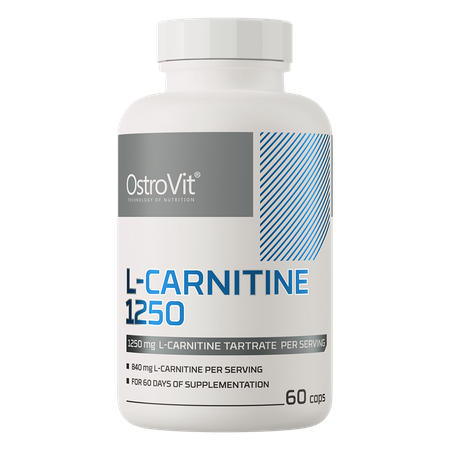
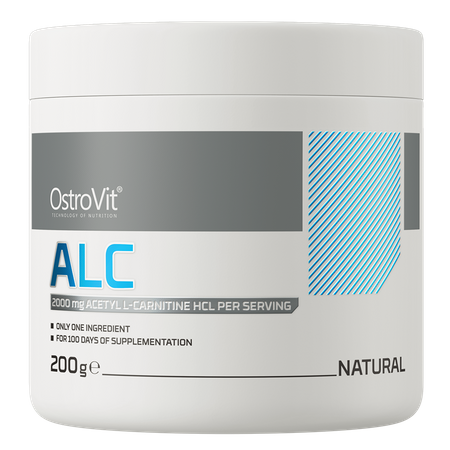


If you want to try just one product and your goal is training, choose tartrate in capsules. If you prefer liquid or powder, decide by whether dosing precision (powder) or convenience (liquid) matters more to you. CLA is a separate fatty acid, not carnitine, and it is worth looking at only once your diet and training are in place. The exact portion and composition are always on the product label.
Frequently asked questions
Does L-carnitine help you lose weight?
The effect is modest and inconsistent. Some studies have shown a small difference, but it does not replace managing your energy balance. No supplement can promise weight loss.
What is the difference between L-carnitine and acetyl-L-carnitine?
Acetyl-L-carnitine has an acetyl group attached to the molecule. The acetyl form has been studied more in connection with brain function and tartrate in connection with training and recovery. For both, the evidence is limited and results vary from person to person.
Is liquid carnitine better than capsules?
There is no good evidence that the liquid form is more effective. Faster absorption is often advertised, but the daily amount and consistency matter more. Choose the form you will actually take regularly.
When during the day should you take L-carnitine?
There is no strictly correct time. Many people take it with food or before training. What matters is sticking to the portion on the label and using it consistently.
Is L-carnitine safe?
In ordinary amounts most healthy adults tolerate it well; side effects can include stomach upset and body odour. Be careful with medicines, kidney problems, thyroid disease and pregnancy, and in those cases ask a doctor for advice.
Does a vegan need L-carnitine?
The amount from food is smaller, but the body makes its own and a deficiency is rare. If you are unsure or suspect a deficiency (for example persistent tiredness or muscle weakness), talk to a doctor; do not start a supplement just out of worry.
Are CLA and L-carnitine the same thing?
No. CLA is conjugated linoleic acid, a fatty acid, while L-carnitine is an amino-acid-like substance. Some products contain them together, but for each of them the evidence for an effect on body weight is small.
Summary
L-carnitine is not a miracle fat burner but a supplement that may be of some use mainly to people whose diet contains little of it and to people who exercise regularly. Choose the form according to your goal and convenience, do not exceed the label portion and honestly assess the result after a few weeks.