Quick answer: which supplements do you actually need?
Most people only need a handful of well-researched supplements, not a shelf full of them. This guide narrows it down to seven with solid evidence behind them — protein powder, creatine monohydrate, vitamin D, magnesium, a multivitamin, omega-3, and ashwagandha — and spells out who benefits most from each and what a sensible dose looks like. To spot a quality product in seconds, look for a named active-ingredient form, an exact per-serving dose, and third-party testing from the brand.
- Regular strength training or interval workouts: creatine monohydrate at 3–5 g a day (around 0.1 g/kg for bigger, harder-training people) is the world’s most researched supplement for building strength and muscle.
- October through April in the Baltic-Nordic region: vitamin D levels drop for almost everyone without supplementing — a practical daily range is 2,000–4,000 IU.
- Best value among protein powders: ICONFIT Micronized Creatine Monohydrate (300g) or Creatine Monohydrate – 300g – OstroVit — see the category.
This isn’t medical advice — if you’re pregnant, breastfeeding, taking prescription medication, or managing a health condition, talk to your doctor or a registered dietitian before starting a new supplement.
In stock now: Dietary supplements
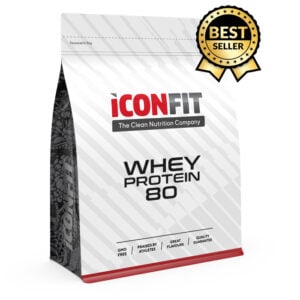
Whey Protein 80 1kg – Whey Protein – Iconfit
Whey protein 31,90 € Select options This product has multiple variants. The options may be chosen on the product page 
Creatine Monohydrate – 300g – OstroVit
Creatine 9,30 € Select options This product has multiple variants. The options may be chosen on the product page 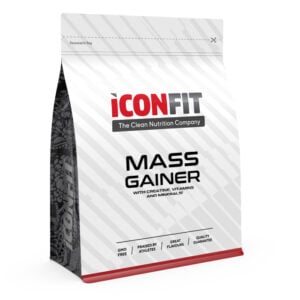
ICONFIT MASS GAINER (1,5KG)
Mass Gain 22,50 € Select options This product has multiple variants. The options may be chosen on the product page
The supplement aisle can feel overwhelming. Hundreds of bottles, dozens of brands, and marketing that promises everything from better sleep to bigger muscles. The good news? You don’t actually need most of it. What you do need is clarity — which supplements have real research behind them, which fit your specific goals, and how to choose a quality version.
This is the first article in a three-part wellness series:
- Part 1 (here): The 7 most popular supplements — what they do, who they help, and our favourites from the Omegafit shelf.
- Part 2: Special situations — pregnancy, athletes, vegans, adults over 50.
- Part 3: How to buy smart — labels, forms, drug interactions, and what’s worth your money.
Let’s start with the basics.
Three quick signs of a quality supplement
Before we dive into individual products, it helps to know what makes a supplement worth your money. Look for these three things on any bottle:
The 3-second quality check
- The active ingredient form is named — for example “magnesium glycinate“, not just “magnesium”
- Specific doses per serving — for example “300 mg KSM-66 root extract”, not “Energy Blend 1500 mg”
- A reputable brand with third-party testing, transparent batch info, or independent quality marks (USP, NSF, IFOS)
That covers most of the work. The rest is matching the right supplement to your specific need.
1. Whey & Plant Protein Powders
What it does. Helps you hit your daily protein target, which supports muscle recovery, satiety, and — alongside training — muscle growth.
Who it helps most. Active people who struggle to reach 130–175 g of protein per day from food alone. Vegetarians and vegans (with plant-based blends). Older adults with lower appetite.
The basics. Adults who train benefit from 1.6–2.2 g of protein per kg of body weight per day. Most of it can come from food — eggs, fish, chicken, tofu, lentils — but a 25–40 g shake is a convenient way to top up when life gets busy.
Forms to know.
| Form | Notes |
|---|---|
| Whey isolate (~90% protein) | Fastest absorbing, very low lactose |
| Whey concentrate (~80%) | Best value for most people |
| Casein (~80%) | Slow-release, great before bed |
| Plant blends (pea + rice) | Vegan, look for combined amino profile |
Our picks from the catalogue.
- ICONFIT Whey Protein 80 — Estonian-made concentrate, the everyday workhorse.
- OstroVit 100% Whey Isolate 700G — leaner isolate for those who want lower lactose.
- ICONFIT WHEY+ Collagen — protein with added collagen for joints and skin.
2. Creatine Monohydrate
What it does. Helps your muscles store more phosphocreatine — the body’s fastest energy source for short, intense efforts. The result over weeks of training: a few extra reps per set, more strength, slightly more muscle.
Who it helps most. Anyone who lifts weights or does interval-style training. Growing evidence also for adults over 60 (muscle preservation, possibly cognition) and for vegetarians, who naturally have lower baseline stores.
The basics. Creatine is the single most-researched sports supplement in the world, with hundreds of studies and decades of safety data behind it. Expect 5–15% more strength and 1–2 kg more lean mass over a 12-week training cycle.
How to take it. 3–5 grams per day works for most people. Larger bodies and intensive trainees often benefit from scaling up to roughly 0.1 g per kilogram of body weight per day — that’s about 8 g for an 80 kg person, or 10 g for a 100 kg athlete. No special timing needed: morning, with training, with dinner all work. A “loading phase” of 0.3 g/kg/day for 5–7 days reaches saturation faster, but you reach the same plateau in about 3 weeks of regular dosing.
Our picks from the catalogue.
- OstroVit Creatine Monohydrate 300 g — clean, well-priced, our regular bestseller.
- ICONFIT Micronized Creatine Monohydrate 300 g — Estonian brand, finely milled for easy mixing.
- Optimum Nutrition Micronised Creatine 317 g — premium global option.
A friendly tip. “Creatine HCl”, “buffered creatine” and other premium variants are not meaningfully better than plain monohydrate — just more expensive ways to deliver the same molecule. Save your money.
3. Vitamin D — the winter essential
What it does. Supports normal bone health, immune function, mood, and muscle function (all EFSA-approved health claims).
Who it helps most. Almost everyone living in the Baltic-Nordic region from October through April, when the sun is too low for our skin to produce vitamin D on its own.
The basics. Most adults in our region show insufficient blood levels by late winter, even those who eat fatty fish regularly. Through the dark months (October–April), 2000–4000 IU per day is the practical range that most Nordic-Baltic clinicians recommend — and 4000 IU is EFSA’s tolerable upper limit for chronic use. For confirmed deficiency, 2000–4000 IU for at least 3 months, then retest to fine-tune. Optimal blood level is 75–125 nmol/L (25(OH)D test).
A nice pairing. Vitamin K2 (MK-7, 90–180 mcg) is often taken alongside vitamin D — it helps direct calcium to bones rather than soft tissues.
Our picks from the catalogue.
- ICONFIT Vitamin D3 4000 IU — oil capsules for better absorption of this fat-soluble vitamin.
- Vitamin D3 4000 + K2 – 100 tablets – OstroVit — the popular D + K2 combination in one tablet.
- Allnutrition Vit D3 2000 IU (200 capsules) — gentle daily dose.
4. Magnesium — for sleep, stress and steady energy
What it does. Magnesium contributes to normal muscle function and helps reduce tiredness — two EFSA-approved health claims with solid science behind them.
Who it helps most. People who don’t sleep deeply, who feel stressed, who train hard, or who get muscle cramps. Modern diets, especially those low in leafy greens, nuts and whole grains, often fall short.
The basics. Magnesium is involved in over 300 enzyme reactions in your body — including those that produce energy and relax muscle and nerve activity. Total daily target (food + supplement combined) is 300–350 mg of elemental magnesium for adults. From supplements specifically, EFSA’s safe upper limit is 250 mg/day — that’s the dose to look for on the label.
Form matters more than the milligrams.
| Form | Best for |
|---|---|
| Glycinate / bisglycinate | Sleep, stress, sensitive stomachs |
| Citrate | General repletion, also helps regularity |
| Malate | Fatigue, fibromyalgia |
| L-threonate | Cognitive support (emerging research) |
| Oxide (the cheap option) | Poorly absorbed — skip it |
Our picks from the catalogue.
- OstroVit Magnesium Glycinate 90 capsules — our regular bestseller for sleep and stress.
- ICONFIT Magnesium B6 — Estonian brand, citrate + B6 for normal energy metabolism.
5. Multivitamins — a sensible baseline
What it does. Provides a daily baseline of essential vitamins and minerals — useful when food intake is limited, restrictive, or temporarily off-balance.
Who it helps most. People on restrictive or elimination diets, those with low appetite, women planning pregnancy (prenatal-specific), older adults with reduced absorption.
The basics. For a healthy adult eating a varied diet, a multivitamin is optional. For the situations above, it’s a sensible safety net. The trick is to match the formula to your situation — women’s formulas often include extra iron, sport-oriented formulas favour B vitamins and electrolytes, and prenatal multivitamins are built around folic acid, iodine and iron.
Our picks from the catalogue.
- BioTechUSA Multivitamin for Women 60 tablets — formulated around women’s needs.
- OstroVit 100% Vit&Min 90 tablets — vitamin and mineral tablets.
6. Omega-3 / Fish Oil
What it does. Supplies EPA and DHA — the long-chain omega-3 fats that contribute to normal heart and brain function (EFSA-approved claims).
Who it helps most. People who don’t eat fatty fish twice a week (salmon, mackerel, sardines, herring). Pregnant and breastfeeding women, who pass DHA to their baby’s developing brain. Anyone with cardiovascular, joint or mood concerns.
The basics. Read the label carefully. A 1000 mg fish oil capsule often contains only 300 mg of actual EPA + DHA — and EPA + DHA combined per serving is the only number that matters. Aim for at least 500–1000 mg combined per day from supplements if your fish intake is low.
Freshness tip. A high-quality fish oil has TOTOX (a freshness number) below 26. Quality brands publish their testing — that’s a strong sign of a trustworthy supplier.
Our picks from the catalogue.
- ICONFIT Premium Omega 3 — Estonian brand, high EPA + DHA per softgel.
- OstroVit Elite Omega 3 — concentrated formula for higher daily doses.
- NOW Omega-3 + D3 Immuno — convenient combination, ideal for winter.
7. Ashwagandha — a friend for stressful seasons
What it does. A traditional Ayurvedic adaptogen with modern research supporting its use for stress reduction and sleep quality.
Who it helps most. People dealing with chronic stress, restless sleep, or low mood — and athletes looking for gentler recovery support.
The basics. Trials using 300–600 mg per day of a standardised root extract (most often the KSM-66 form) for 8–12 weeks consistently show meaningful reductions in stress and cortisol levels, plus improved sleep quality.
How to take it. 300–600 mg daily, typically in the evening — it pairs naturally with the wind-down before bed.
A note before you start. Avoid ashwagandha during pregnancy, and check with your doctor if you take thyroid medication.
Our picks from the catalogue.
- OstroVit KSM-66 Ashwagandha 120 tablets — the most-researched standardised form.
- Swanson Ultimate Ashwagandha KSM-66 60 capsules — same KSM-66 extract, trusted American brand.
- ICONFIT Ashwagandha 90 capsules — Estonian brand, everyday option.
Frequently Asked Questions
Which supplements form a solid daily foundation for most people?
In Northern European climates, the three most evidence-backed staples are vitamin D3 (essential from autumn to spring), omega-3 fatty acids (if fatty fish is not eaten twice weekly), and magnesium (to support muscular and nervous system function).
Can supplements be taken together, or should they be spaced throughout the day?
Fat-soluble vitamins (D, E, K, A) and omega-3 require dietary fat for optimal absorption and should be taken with meals. Magnesium is best taken in the evening to support relaxation. However, calcium and iron should not be taken together, as they compete for absorption.
Do protein powder and creatine replace a healthy diet?
No, supplements are designed to complement a balanced diet, not replace real food. Protein powder is a convenient post-workout source and creatine boosts muscular strength, but wholesome meals must provide the essential dietary foundation.
How do I choose reliable foundational supplements?
Look for brands that clearly disclose active ingredient amounts per serving without undisclosed proprietary blends. Reliable daily choices include OstroVit Omega 3 90 capsules and ICONFIT Vitamin D3 4000 IU (90 oil capsules) — explore the full supplements range.
Coming up next
This was the most-popular shelf. In Part 2, we look at special situations — and the supplements that really do make a difference for them:
- Trying to conceive and pregnancy — folic acid, iodine, omega-3 DHA, iron
- Athletes and heavy training — what works beyond protein and creatine
- Vegans and vegetarians — what’s essential, what’s optional
- Adults over 50 — what changes biologically and how to adapt
And in Part 3, we put together a simple buying framework — how to read labels, which active forms matter, drug interactions worth knowing, and how to avoid the products that aren’t worth your money.
This guide is for general wellness information and is not a substitute for personalised medical advice. If you’re pregnant, breastfeeding, taking prescription medication, or managing a specific health condition, please talk to your doctor or registered dietitian before starting any new supplement.