Quick answer: how much melatonin should you take, and when?
Start with 0.5–1 mg of melatonin, taken 30–60 minutes before bedtime — studies show low doses work as well as high ones, often better. If the effect is too weak, you can raise it to 2–3 mg, but going above 3 mg is rarely necessary. EU rules cap over-the-counter supplements at 1 mg.
- Older adults (60+): 0.3–1 mg is usually enough, since the body’s own melatonin production declines with age.
- Jet lag or shift work: 1–3 mg, taken 30 minutes before the sleep period — for jet lag, use destination time for the first three days.
- Best value for money: OstroVit Keep Sleep Melatonin 300 tablets or OstroVit Keep Sleep Melatonin 180 tablets — see the category.
This is general information, not medical advice — check with a doctor or pharmacist before use, especially if you’re pregnant, breastfeeding, taking medication, or managing a chronic condition.
In stock now: Melatonin

Melatonin is a hormone produced by the pineal gland at the onset of darkness — it is the main signal of the body's internal biological clock, which tells you that it is time to go to sleep. In Estonia, where there is 16 hours of darkness a day in winter and very little in summer, many people's melatonin cycle suffers. In this guide, we explain how melatonin works, what is the optimal dose, when to take it and who it is not suitable for.
Last updated: September 2026
What is melatonin and how does it work?
Melatonin is a hormone produced by the pineal gland in the brain. Its production begins at nightfall, peaks around 2-4 a.m., and drops back to low levels in the morning. Melatonin doesn't directly make you sleep — it signals the body that it's time to go into sleep mode. In essence, melatonin is the body's "darkness hormone."
Melatonin taken as a dietary supplement is absorbed quickly (peaks in the blood in 30–60 minutes) and helps with sleep problems in two ways: it shortens the time it takes to fall asleep and supports deeper, more uninterrupted sleep. Unlike sleeping pills, melatonin is not addictive and does not unnaturally alter sleep patterns — the body produces it every night.
Estonia is located between 57th and 59th latitudes, and the length of daylight changes dramatically throughout the year — 6 hours in winter, 19 hours in summer. In addition, we spend significantly more time indoors and in front of screens. Blue light (phone, computer, LED lamps) further inhibits melatonin production. This explains why many Estonians experience difficulty falling asleep, waking up at 5 in the morning in the fall, and intermittent sleep — the natural melatonin cycle is disrupted.
Recommended Melatonin Dosage
One of the most common misconceptions is that “more is better.” In fact, studies have shown that low doses (0.3–1 mg) are often as effective or even better than high doses (5–10 mg). Too high a dose can cause morning drowsiness, headaches, and paradoxical sleep problems.
| Purpose | Recommended dosage | Note |
|---|---|---|
| Difficulty falling asleep (general) | 0.5–1 mg | Start low — only increase if necessary |
| Shift worker / jet lag | 1–3 mg | During the first 3 days of travel at the destination |
| Deep sleep/intermittent sleep | 1–2 mg | Long-acting (sustained-release) preferred |
| Seniors (60+) | 0.3–1 mg | The body's own production decreases with age |
| EU maximum limit for food supplements | 1mg | In the EU, the maximum amount for sale without a pharmacy is 1 mg. |
Practical advice: start with a dose of 0.5–1 mg 30–60 minutes before bedtime. If the effect is insufficient, you can increase the dose to 2–3 mg if necessary — but it is rarely necessary to go beyond 3 mg. In Estonian pharmacies and dietary supplement stores, melatonin is usually sold in doses of 1 mg and 3 mg.
When to take melatonin?
Timing is more important than dosage when it comes to melatonin. Taking melatonin too early can cause drowsiness before bedtime, while taking it too late can shift your sleep cycle to the next morning.
- General difficulty falling asleep: 30–60 minutes before recommended bedtime
- Jet lag when traveling east: using destination time, 30 minutes before bedtime for the first 3 days
- Shift workers: 30 min before the start of the sleep period (regardless of the time of day)
- Delayed sleep phase: A small dose 5–6 hours before normal bedtime may help shift the phase earlier
What to avoid: Don't take melatonin at midnight if you wake up during the night. This can cause you to feel groggy in the morning. In such cases, it's better not to fall back asleep with a chemical, but with magnesium or simply with more calming techniques (breathing, a book).
Side effects and safety
Melatonin is one of the safest sleep aids — studies show that even with long-term use (up to 12 months), tolerance or addiction does not develop. However, side effects are still possible, especially with higher doses and incorrect timing:
- Morning drowsiness — especially if the dose is too high or taken too late
- Vivid dreams or nightmares — Intensification of REM sleep
- Headache, dizziness — rare, transient
- Nausea — taking with a light snack may help
- Mild hormonal changes — long-term use may affect cortisol and growth hormone cycles
Who is melatonin NOT suitable for?
- Pregnant and nursing mothers — not enough research, melatonin crosses the placenta and is excreted in breast milk
- Children under 12 years of age — only on doctor's recommendation, effects on development not fully understood
- Autoimmune diseases (lupus, RA, MS) — may stimulate the immune system
- People taking blood thinners (warfarin) — may affect clotting
- People with depression or seasonal affective disorder (SAD) — may worsen daytime sluggishness
- People awaiting surgery — stop using 2 weeks before (enhances anesthesia)
Our recommendations — the best melatonin products
You can find melatonin products in different dosages and forms in the Omegafit.ee selection. Here are our recommendations:
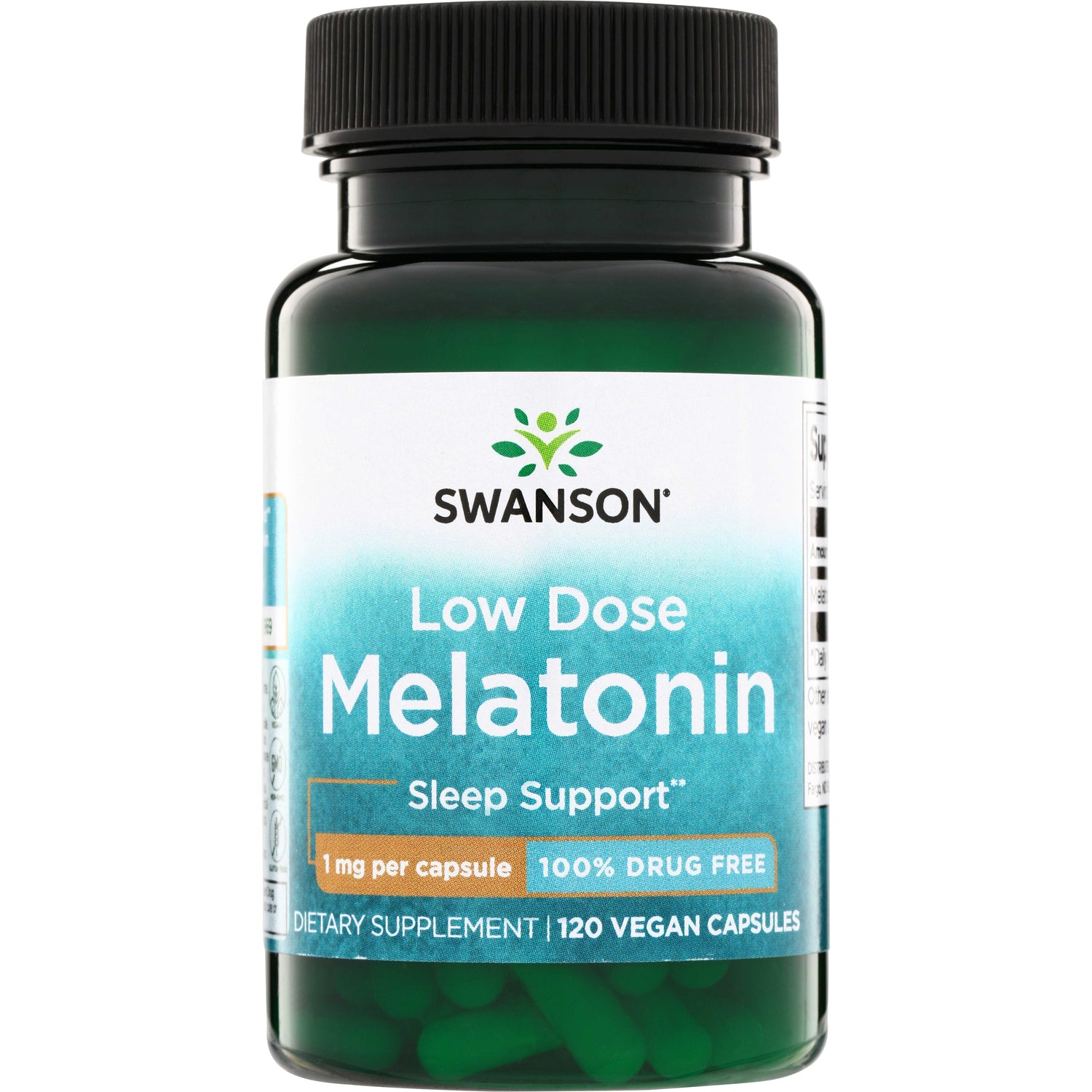
See the full selection on the melatonin category page — you'll also find meditation-mix products there (melatonin + magnesium + ashwagandha in a set).
Combining melatonin with other supplements
Melatonin works especially well in combination with other calming supplements that support sleep in different ways:
- Magnesium (especially the glycinate form) — relaxes muscles and the nervous system, activates the parasympathetic nervous system. Magnesium also regulates melatonin production. Dosage: 300–400 mg in the evening.
- Ashwagandha (KSM-66) — adaptogen, lowers cortisol (~27%). Low cortisol in the evening = better sleep quality. Dose: 300–600 mg in the evening.
- 5-HTP — a precursor to serotonin, which is converted into melatonin in the body. Suitable for seasonal affective disorder (SAD). Dosage: 50–100 mg in the evening.
- L-theanine — an amino acid found in green tea, with a mild sedative effect. Dosage: 100–200 mg in the evening.
- Vitamin B6 — required for the synthesis of melatonin from 5-HTP. Most quality sleep supplements contain B6.
30–60 min before sleep: 1 mg melatonin + 300 mg magnesium (glycinate). In the winter period (October–March): add vitamin D (4000 IU) in the morning — winter vitamin D deficiency worsens sleep quality. In case of high stress levels: also add 300 mg KSM-66 ashwagandha in the evening.
Frequently asked questions
How exactly does melatonin work?
Melatonin binds to MT1 and MT2 receptors in the brain, primarily in the suprachiasmatic nucleus (SCN), which is the body's "biological clock." This signals that it is time to sleep. Unlike sleeping pills, melatonin does not force the body to sleep — it simply signals that night has begun. Therefore, melatonin does not unnaturally alter sleep patterns and can be taken over a long period of time.
How much melatonin should you take per day?
Start with a dose of 0.5–1 mg 30–60 min before bedtime. Studies have shown that low doses (0.3–1 mg) are often as effective as high doses (3–5 mg). In the EU, the maximum permitted dose in supplements is 1 mg — stronger doses (3 mg+) are available from imported products or pharmacies. Too high a dose can cause morning drowsiness and paradoxical sleep problems.
When is the best time to take melatonin?
30-60 minutes before your recommended bedtime. Taking it too early (more than 2 hours before) may cause drowsiness before bedtime. Taking it too late (just before sleep) may delay the effects until midnight. If you wake up during the night, DO NOT take another dose — this may cause drowsiness in the morning.
Is melatonin safe for long-term use?
Yes. Studies (up to 12 months) have not shown tolerance or dependence. Unlike sleeping pills (benzodiazepines), melatonin does not unnaturally alter sleep patterns. In Estonia and the EU, melatonin (up to 1 mg) is available as an over-the-counter dietary supplement. However, we recommend not taking it every night without interruption unless necessary — give your body the chance to produce it itself.
Who is melatonin NOT suitable for?
Melatonin should not be consumed by pregnant and breastfeeding mothers (not enough studies), children under 12 years of age (only on doctor's recommendation) and patients with autoimmune diseases. Consumers of blood thinners (warfarin) should consult a doctor. People awaiting surgery should stop using it 2 weeks before, as it may enhance the effects of anesthesia.
Where to buy melatonin?
The Omegafit store has a wide selection — see the full range in Melatonin. Popular in-stock options: OstroVit Keep Sleep Melatonin 300 tablets and OstroVit Keep Sleep Melatonin 180 tablets. We deliver to Estonia (1–2 business days), Latvia (2–3), Lithuania (2–4) and Finland (3–5); shipping is free over €49. You can also pick your order up in person at OG Gym, Roheline tn 74, Pärnu, Estonia.
Questions? Call +372 5562 2534 or write info@omegafit.ee.
Read other guides as well
- Magnesium Guide — Magnesium Glycinate is Melatonin's Best Sleep Companion
- Ashwagandha Guide — An Adaptogen That Lowers Cortisol and Supports Sleep
- 5-HTP Guide — A Serotonin Precursor That the Body Converts into Melatonin
- Vitamin D Guide — Winter Vitamin D Deficiency Impairs Sleep Quality
2026: brands have become more homogenous — choose according to taste and budget, not the label
The supplement market has changed dramatically. In the early 2000s, it was the "Wild West": ingredients were opaque, claims were exaggerated, online reviews were virtually nonexistent, and "premium" often simply meant a higher price tag. The user paid for the brand name, not the actual quality, because they had no way to compare.
Today, the picture is different. The European Union's Food Supplements Regulation (Directive 2002/46/EC + Regulation 1925/2006) regulates the purity of ingredients, permitted amounts, and claims on labels. Serious manufacturers — including Estonian ICONFIT , Polish OstroVit , US NOW Foods and others — use the same grade of raw materials (USP, Kosher, Halal, GMP-certified factories), the same capsules (gelatin or HPMC), and the same flavoring suppliers. Whey concentrate 80% is whey concentrate 80%, regardless of whether the package has the ICONFIT or Optimum Nutrition logo.
What does this mean for the user?
- A price difference of 2-3× is not a quality difference. It is a brand fee, marketing budget and supply chain margin. Premium brands do not use a "secret formula" — the formula is on the same labels.
- Online reviews replace advertising. Trustpilot, Google Reviews, and product page reviews show real user experience — it's more reliable than a sales pitch.
- Flavors have become more uniform. Chocolate, vanilla, and strawberry flavors have become standardized over the years. The difference between brands is now small — more like sugar-free vs. sugared, not "bad taste vs. good taste."
- Local brands are often a better choice. ICONFIT (Estonia), OstroVit (Poland) — same quality, shorter supply chain, faster delivery, local customer support, smaller CO₂ footprint.
Our recommendation: compare the price per gram of active ingredient, read reviews, choose the flavor you like . The brand name is the least information these days — the ingredients and reviews speak for themselves.